Friday, December 19, 2008

The Double Life of Veronique

"The Double Life of Veronique"
Krzysztof Kieslowski, 1991


Watching “The Double Life of Veronique” is like trying to solve a puzzle, but without such nuisances as burgeoning frustration or headaches. No, this is one of those films that is stunning because of its quietness, its challenging yet simple narrative, and its patient pacing. The film centers on two women, who may be identical twins, named Veronique, both of whom are played by an outstanding Irene Jacob: one of them is a promising singer in Poland and the other is a teacher in France. Neither of them know that the other exists. But when one of them suddenly dies, we switch to the narrative of the other Veronique, who is in the middle of having sex with her boyfriend.

The director Krzysztof Kieslowski likes to play with this idea of opposites, and how two extremes really aren't so far apart. We witness, for instance, this link between pain and sex, and death and life, when we first see the other Veronique, who inexplicably feels saddened post-coitus, because she feels that she's lost someone she knows. And for the rest of the film, Veronique attempts to figure out who or what she has lost. Kieslowski and his cinematographer Slawomir Idziak (“Black Hawk Down”) craft an impeccable visual world, complete with a red and green color palette and numerous reflections, that reveal Veronique's confusion, while making the notion of the double all the more apparent.


Veronique's journey is really one of self-discovery, about a woman trying to figure out who she is, even though she inhabits a world that seems to lie much beyond her control. But there is also a somewhat self-reflexive quality to the film; it feels like it is as much about Veronique's story as it is about us being able to look in on her life. It is no accident that a love interest of hers is a puppeteer, Alexandre Fabbri (Philippe Volter), who himself involves her in a playful scheme of his. In one memorable sequence, Veronique, clad only in her underwear, walks up to a window, touches the glass with her hand, and closes her eyes. It is then that we realize that she is yearning for something inexplicable, something, perhaps, that lies beyond her limited, filmic world. But we, the viewers, are merely on the other side of the looking glass. Rarely have I felt so close to and so far away from a character. Rarely has this boundary between reality and artifice been so vaguely and so clearly delineated.

10/10

First Viewed: 12/19/08, on a lovely Criterion DVD - IMDb

Monday, December 15, 2008

Duly Noted: Live Free or Die Hard and Les Choristes

Duly Noted
"Live Free or Die Hard" and "Les Choristes"


“Live Free or Die Hard,” being the latest film in the franchise that gave us the classic action film “Die Hard” (I have not seen the other two sequels) is the type of of movie that you try your best to enjoy. It features Bruce Willis as the bad-ass super-cop, John McClane. It's supposed to offer great action sequences, some fantastic one-liners, and great villains; in short, it has the potential to serve as perfect entertainment. The problems I have with “Live Free or Die Hard” are similar to those I have after listening to Coldplay. Their songs are catchy and easy to listen to, but I find them so inane and boring that, after listening to one of their songs, I ask myself why I chose to do so in the first place. I felt the exact same way after watching “Live Free and Die Hard.”

The movie, which is directed by Len Wiseman, the man behind “Underworld” and “Underworld: Evolution,” the other two films in his limited canon, has the following premise: a computer genius and villain with the utterly uncreative bad-guy name Thomas Gabriel (Timothy Olyphant) is angry when leaders in the U.S. ignore his calls to revamp the security of the computer networks upon which the country relies. In retaliation, he decides to bring the country to its knees by controlling everything through computers, hiring a sizable team of thugs to carry out his dirty work, and teaming up with his lover, a martial-arts specialist named Mai. Oh, and McClane gets involved when the Feds send him to rescue a ditzy computer hacker named Matt Farrell from Gabriel's thugs.

It's an utterly ridiculous plot, and I don't mind that in the least. What bother me most is that an evil plan involving a villain that gains control of everything is, by its nature, dull. One could argue that the premise of “Die Hard” was similar, but the difference is that Alan Rickman's villain disillusioned himself with his perfect master plan. He was so arrogant that he couldn't recognize its flaws; then, McClane made an entrance, and the rest is history. In “Live Free or Die Hard,” Gabriel has instantaneous access top secret documents and facilities, he can see everything on CCTV, and he can even order a jet to attack targets; he has such an omnipotent presence that it ignores the far more interesting and crazed humanity behind such a plot. It isn't a plan that lies within the realm of great villainy – it's an example of Hollywood at its most schizophrenic and incoherent.

Wiseman does not help matters. His direction, particularly of his actors, feels inadequate, and he appears to feel that he can make up for the film's various inadequacies by throwing a host of action movie cliches at us – the problem is that such requisite action movie fodder doesn't work very well either. The action sequences feel cobbled together, and the fight scenes between McClane and some henchman play out like poorly conceived boss fights in a video game. It's also troubling when the inevitable deus ex machina, involving Gabriel kidnapping McClane's daughter, fails to trigger any kind of feeling from its viewers. Like the rest of the movie, it's just plain boring.

"Les Choristes" follows the familiar mode of other inspirational films in which a brilliant teacher gives his students the opportunity and the hope that society has not. The setting is post-war France, where a middle-aged teacher named Clement Mathieu (an excellent Gerard Jugnot) starts work at a dreary institution for troubled children. Mathieu, who is a composer in his free time, goes against the school's stringent and incompetent headmaster and forms a chorus, making just about everyone feel happy.

It's difficult not to like "Les Choristes." Aside from an astoundingly stupid framing narrative, it's a pretty well made movie with decent performances – we even get to enjoy some lovely singing. But it's the kind of film that doesn't take any chances, that relishes in its own predictability, and doesn't leave much of an impression once you've finished the journey.

"Live Free or Die Hard" First Viewed: 12/11/08 on DVD - IMDb
"Les Choristes" First Viewed: 12/5/08, on DVD - IMDb

Saturday, December 13, 2008

My New Yorker Obsession

I've had a subscription to The New Yorker for nearly half a year, and I've basically been obsessed with it, haha. Their articles are extremely well-reported and provide an excellent template for aspiring writers. I usually try to read The Economist every few weeks, and I started reading other high-quality liberal publications like Harper's Magazine and The New Republic. Thus my transformation into a liberal elitist is almost complete, though I intend to come full circle and try reading conservative publications like The Nation next semester. In any case, I just wanted to make a list of my favorite articles that came out in this year's issues of The New Yorker. I've read great articles in other magazines, including National Geographic, but these were particularly exemplary.

"The Chameleon: The Many Lives of Frederic Bourdin"
by David Grann

This article chronicles the life of a notorious French impersonator, and what happens when he decides to impersonate a missing teenager from Texas. Rarely have I found an article so riveting. It was like reading a great piece of fiction - except that it was all real.


"Up and Then Down"
by Nick Paumgarten

This fantastic article delves into the elevator industry, and disproves some myths (the "close door" button hasn't been a functioning button since the early 1990s, and if you're trapped, there's literally no way to escape) while centering on the predicament of a worker who was trapped in his office's elevator during one harrowing weekend.

"Let It Rain"
by Hendrik Hertzberg

Hertzberg, a rather brilliant political observer, who was a former speechwriter for the Carter administration, provides this wonderfully incisive and witty essay about McCain's choice of Sarah Palin as a political ploy that successfully, albeit briefly, took the wind out of Obama's sails in his post-DNC days.


Making It: How Chicago Shaped Barack Obama"
by Ryan Lizza

This nearly 15,000-word article, by Ryan Lizza, who is a graduate of UC Berkeley, is an impressive feat. The number of people he tracks down for his report is dizzying - I almost wish that Lizza had included a list of names so that I could keep track of them all, and their relationships to Obama.

"The Choice"
I read countless editorial endorsements in the weeks leading up to the election, but it was The New Yorker's lengthy and comprehensive one that really stood out to me. The editors have a way of making insights that may have been touched upon by other news sources sound incredibly compelling. For example, in describing Sarah Palin, "We are watching a candidate for Vice-President cram for her ongoing exam in elementary domestic and foreign policy."


"On a Limb"
by Dana Goodyear

This lovely piece concerns UC Berkeley's very own notorious treesitter, Fresh, who resided in front of Wheeler Hall during the spring semester. It's a funny, outsiders' look into the dilemma, and besides, it's about Cal, so that's really cool.

Favorite Reviews: "Troubled Sons" and "Soul Survivor"

These reviews, of "W.," by David Denby, and "Quantum of Solace," by Anthony Lane, are basically perfect film reviews. All aspiring critics, myself included, probably view these two reviews as the epitome of current film critique. It's hard to explain why, precisely, they work so well. It helps that both critics are incredibly erudite, and that they provide fresh takes on the films, and on what did or did not work for them. The key, I think, is that they criticize without sounding whiny, and it doesn't sound like they take it personally when a film sucks (this is something I'm trying to overcome in my reviews).

Wednesday, December 10, 2008

Well, Fuck You, Too: Frenzy and 25th Hour

Well, Fuck You, Too
"Frenzy" and "25th Hour"


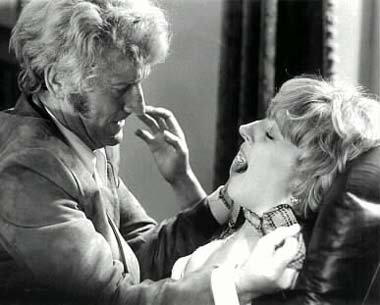
I find it fascinating, given the nearly twenty films that I've seen this semester in my class on Alfred Hitchcock, how little the director's interests changed during his fifty years of filmmaking. By 1972, he was still interested in the concept of the double persona within one individual, with characters drinking brandy, with staircases, with his guilt over his love for food, with his focus on falsely accused individuals, and with murdering someone through strangulation. But with “Frenzy” (1972), the first film that he made without having to worry about censors (it is his only R-rated film), all of these obsession are taken to a more extreme level.

The story is a Hitchcock staple: a troubled guy is falsely accused of murdering a woman, and he must work against authority figures in order to prove his innocence. But without the need to work against censors, which often forces a filmmaker to resort to more creative means, Hitchcock was free to depict his rather disturbing fascination with strangulation in a more graphic manner. The potential downside to this new-found freedom is that a filmmaker can go too far, and push the envelope when modesty may work best. What's remarkable about “Frenzy” is that Hitchcock, with the exception of a grating sequence involving a detective's wife bringing out disturbing-looking plates of food for dinner, knows when and when not to employ these new, more explicit filmmaking tools for the greatest effect.

“Frenzy” is not one of the director's best works: his characters aren't all that memorable, and he has explored this kind of story before – the film has a rather tired feel. (Admittedly, I may feel this way because the film was shot in the 1970s, when people and clothes were really ugly, and with an intentionally desaturated look, but I digress.) What Hitchcock offers us is a decent film with a few brilliant flourishes. Such moments as the notoriously brutal and unflinching murder sequence, where a “nice” guy gives in to his more violent impulses, and rapes and strangles a nice marriage counselor with his necktie, serve as a reminder that Hitch, even in his old age and his poor health, was a one-of-a kind filmmaker. I can't think of any other director who could assault his viewers with a horrible rape sequence, and have them love him all the more because of it.


“25th Hour” (2002), which stars Edward Norton as a former drug dealer, named Monty, who is about to go to prison, is only the third Spike Lee movie that I've seen – I now regret having seen so little of his work. It's a long and challenging film, but it's efficiently edited, well shot by the cinematographer Rodrigo Prieto, and so unusually compelling that it generally avoids its own potential pitfalls. “25th Hour” was filmed in New York during the aftermath of the Sept. 11 attacks, and Lee parallels the destruction, and reconstruction, of Ground Zero with the downfall and reconstruction of Norton's troubled character.

Lee is a bold filmmaker. He risks de-railing his narrative with a ten-minute rant, in which Monty, venting his director's frustrations - “Send those Enron assholes to jail for fucking life!” - gives an exasperated “fuck you” to just about every aspect of and person in New York. It's an unusual and self-reflexive sequence, but I think it's all the more stunning for those very reasons. I could imagine some viewers hating the sequence, particularly because it feels so arbitrary. But it really isn't - “25th Hour” is as much a testament to how Lee loves and hates his city as it is for Monty.

“Frenzy” First Viewed: 12/10/08, on DVD - IMDb
“25th Hour” First Viewed: 12/9/08, on DVD - IMDb

Note: I forgot that "25th Hour" is actually based off of a novel. Monty's rant is taken verbatim from the book. Nonetheless, I feel that Spike Lee could relate to the issues that the rant addresses, which is why it feels so powerful and personal, in my opinion.

Wednesday, December 3, 2008

The Birds

"The Birds"
Alfred Hitchcock, 1963


Note: I'm taking a course on Hitchcock, and every Wednesday we have a screening of one of his films. Then we write our thoughts in a "journal," which we turn in the next day. This is one such journal. There are spoilers.

I first saw The Birds (1963) over ten years ago, on a VHS tape and a small screen. Even at that age I was blown away by the sheer spectacle of it all. But what I remembered most clearly from that initial viewing was the haunting image of the dead farmer, his eyes gouged out and his body riddled with bite marks. It struck an even more powerful chord with me this time around. I think that it is such a powerful scene because it deals with the notion that normal things that we take for granted can turn against us; at first, the birds are harmless, but for absolutely “no reason,” they suddenly turn into flesh-eating monsters.

The way that Hitchcock constructs the scene is brilliant. It begins with a long take of the mother slowly walking down the hallway, followed by brief point-of-view shots of the room – in total disarray and covered with streaks of blood – finally culminating in a trio of shots that jumps closer and closer into the corpse's mutilated face. In that brief moment, the mother's shock and terror becomes our own. It bears some similarity to the tracking shot on Charlie's hand in Shadow of a Doubt, when both Uncle Charlie and we realize the importance of the ring on her finger.

To be honest, I think that the setup of The Birds is weak; the connection between Mitch and Lydia is sketchy at best. But the film is really about tension, and in that regard it is a masterpiece. First, there is the actual tension that develops within the utterly bizarre love, um, quadrilateral between Mitch, Lydia, the mother, and Annie. We don't really understand what happened in these characters' pasts, but given the amount of animosity between the characters – most of which is unspoken; it is instead depicted through a number of glares, and the way that Hitchcock positions his characters within the frame – would we really want to find out?

Second, the actual bird attacks are masterfully conceived and executed. Every time a character was attacked, be it a child or a random stranger, I was shocked. I'm not really sure why those attacks were so powerful – I'm surprised that some viewers in the class laughed at many of these moments – but I can posit a guess. In the sequences within the house, we get the sense that our protagonists, led by Mitch, who is an ostensibly strong figure, are completely powerless. I think that Robin Wood sums it up perfectly when he describes the sequence as such: “The home-as-refuge becomes home-as-cage.” The Birds is so unsettling because of this very inversion of everyday life. Our protagonists are powerless, their home turns into a prison, and their fates are left up in the air.

Rating: 9

Second Viewing: 12/3/08, on DVD - IMDb

Tuesday, November 25, 2008

Were the World Mine

"Were the World Mine"
Tom Gustafson, 2008


The hero of “Were the World Mine,” a new film that is based off of Shakespeare's “A Midsummer Night's Dream,” is a gay teenager named Timothy (Tanner Cohen), who attends a private, all-boys high school. Timothy has already come out to his mother, who, as a single parent struggling to find work, views his sexuality as yet another burden that she must carry. In P.E., he's often teased, and occasionally beat, by other students, with the encouragement of their pugnacious and homophobic coach (Christian Stolte). Timothy escapes from his travails by fantasizing about the hot guys in his class singing to him, shirtless, and in near-perfect synchronization, as if performing in a play.

Coincidentally, Timothy has a class with an affable English teacher named Ms. Tebbit (Wendy Robie) who encourages him to audition for the school's rendition of “A Midsummer Night's Dream.” Timothy, as it turns out, is a natural actor with a lovely voice. He's an untapped talent, and is given the leading role as the fairy (har har), but he has another unusual gift – he can make the love potion in Shakespeare's play work in real life. He gives nearly everyone in the town a whiff of the potion, which makes the person – or victim? - fall madly in love with the first person they lay eyes on.

Timothy, by way of his drug, receives the affections of the really cute captain of the rugby team, while the rest of the town's “moral” centered-ness disintegrates. It's surprising that given the setup, the profusion of hot guys, and the above-average visuals, “Were the World Mine” is so dull. Every gay person can relate to Timothy's crush on the high school jock, and how such people turn out to be incredibly hetero-normative. It's a fantasy that I thought I'd like to see play out on screen, but the film is really dealing with obsessions, not with love as it so claims.

A straight friend accidentally receives a dose of the love potion, and promptly grows enamored of Timothy; he's willing to fight to the death with the rugby team's captain for Timothy's favor. “Were the World Mine” feels deceiving because it puts such unreasonable obsessions on the same level as Timothy's real life crushes. This is not so much a film about a gay teen's fantasy, though this is what the film is really trying to be about, as it is a semi-cautionary tale about how unhealthy it is to obsess about other people. I would be content with an exploration of either aspect, but given the rather sloppy way in which the film is conceived, neither part plays out to a satisfactory extent.

At the end, after Timothy has “had his fun,” he casts a spell on everyone in town, returning them to their normal, pre-obsessive states. But everyone has, to some degree, had their eyes opened about love, acceptance – or something. It's not entirely clear what the lesson is, but it isn't all that important anyway. What matters most is the revelation that the rugby captain has really been in love with Timothy all along, and that it took the spell, the lifting of social misgivings about homosexuality, for him to finally accept that. So, our hero becomes a part of the gay fantasy incarnate. But it remains nothing more than a fantasy. Like waking from a dream, the contrivance of it all makes us feel not joy at Timothy's victory, but disappointment at its very flimsiness.

Rating: 5


First Viewed: 11/25/08, in 35 mm projection - IMDb